1548-1570
A young woman in the palace of Toledo
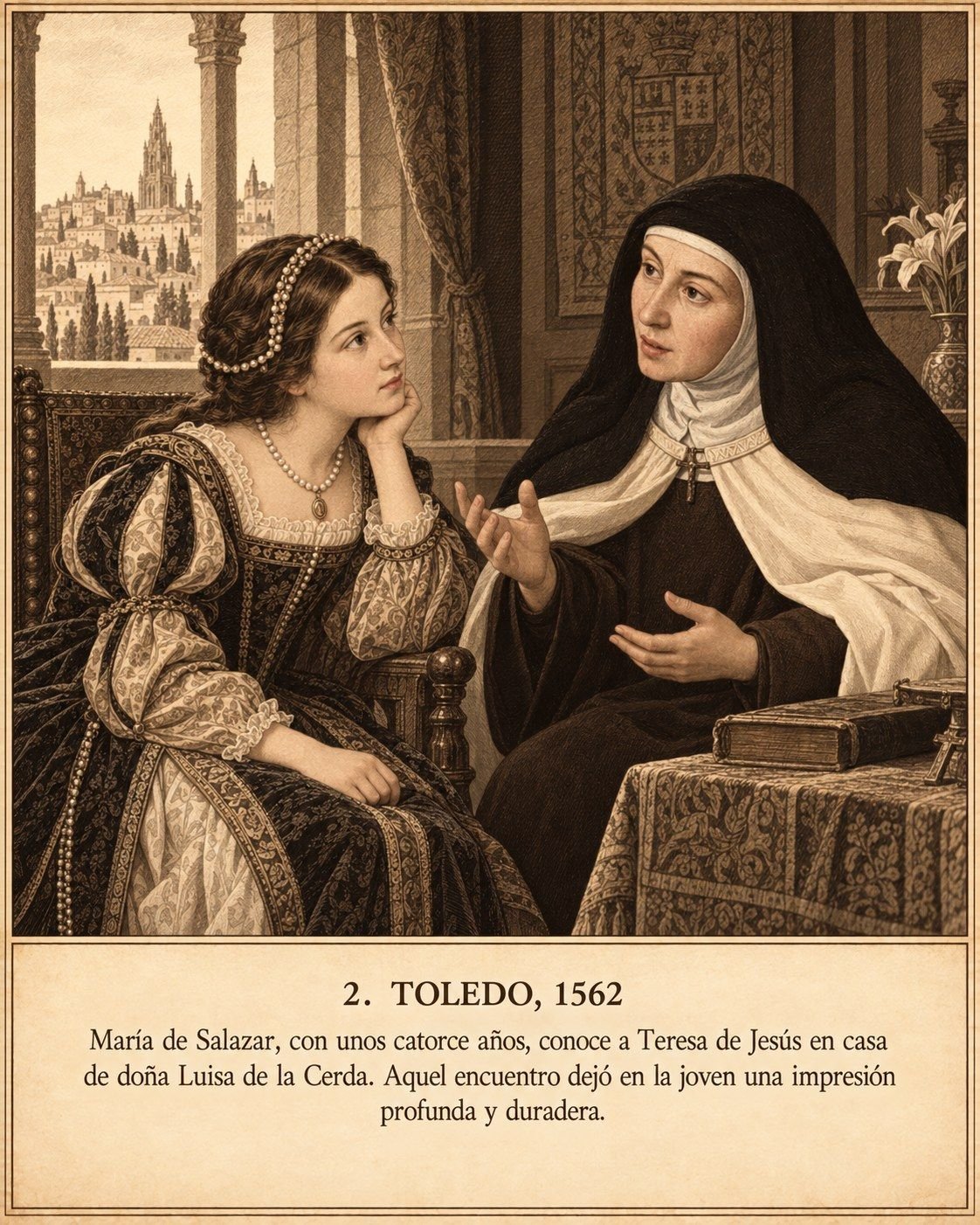
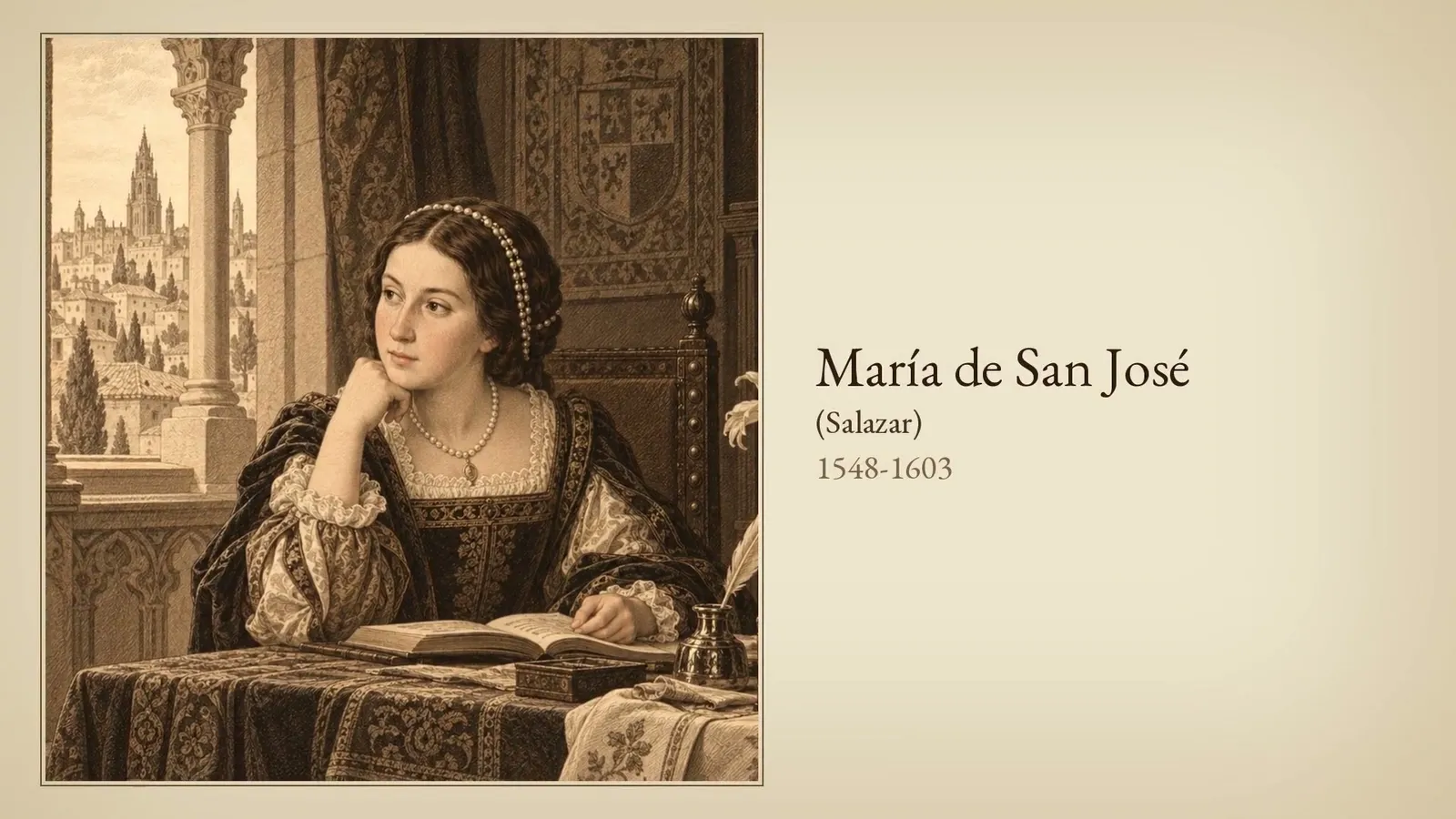
María de Salazar was born in 1548. The records of the communities she passed through call her a native of Toledo, and the reports about her parents vary from one document to another. She was raised in the palace of doña Luisa de la Cerda, widow of Arias Pardo de Saavedra and lady of Malagón. There she learned to read and write in Castilian, came to read Latin and French, and acquired a humanist culture that her writings show on every page.
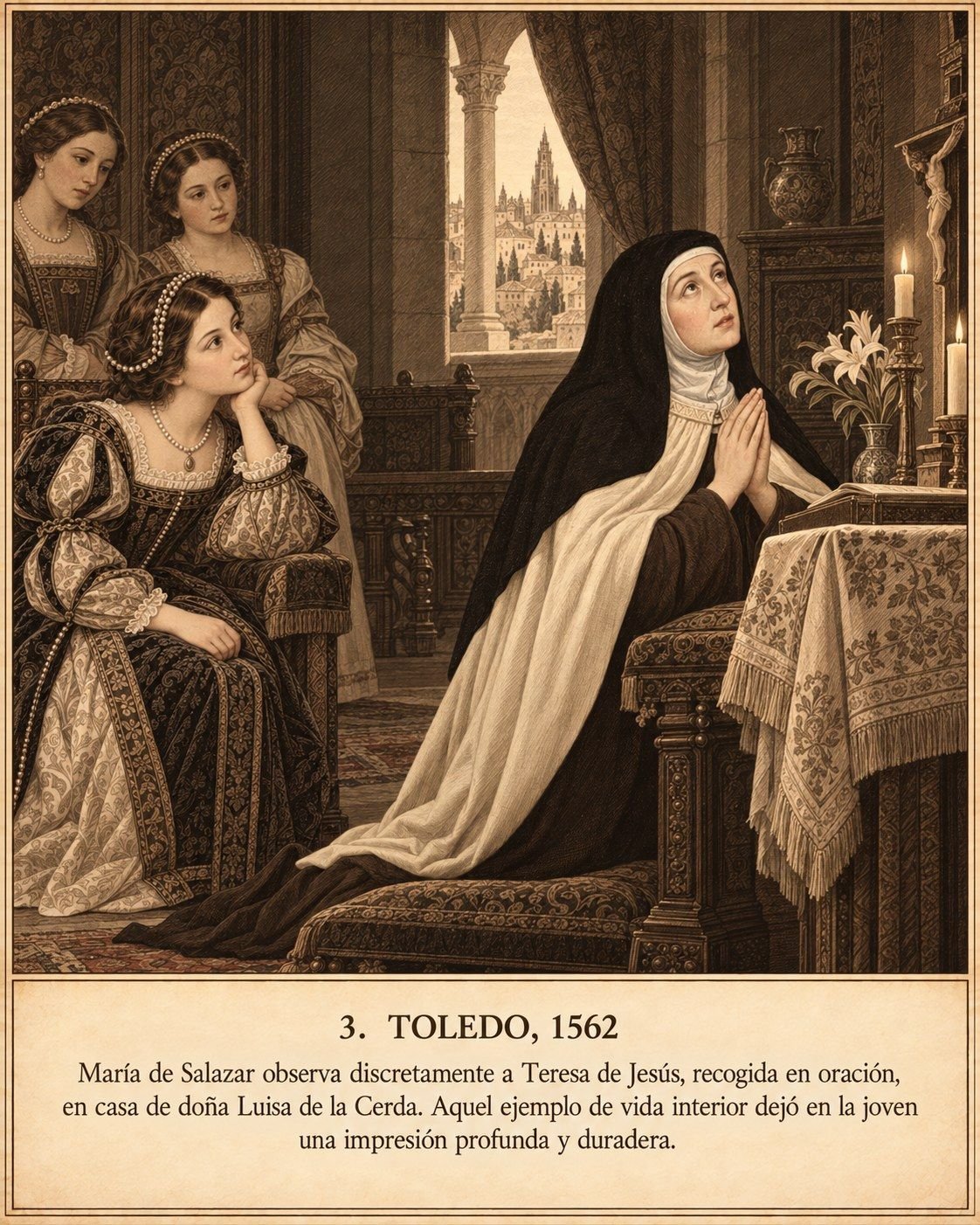
In early 1562 Teresa of Jesus arrived at the palace, sent to console doña Luisa, and stayed six months. María was thirteen or fourteen years old. She would recall later that she and her companions spied on Teresa through the cracks of the door while she prayed, and she credited that visit with her love of solitude and her practice of prayer. She spent six more years in palace life. In the spring of 1568 Teresa returned to Toledo to negotiate the foundation of Malagón. María, then twenty years old, wrote that the Lord called her at that moment to religious life, and she kept her decision to herself for two years.
1570-1575
Malagón and the road to Andalusia
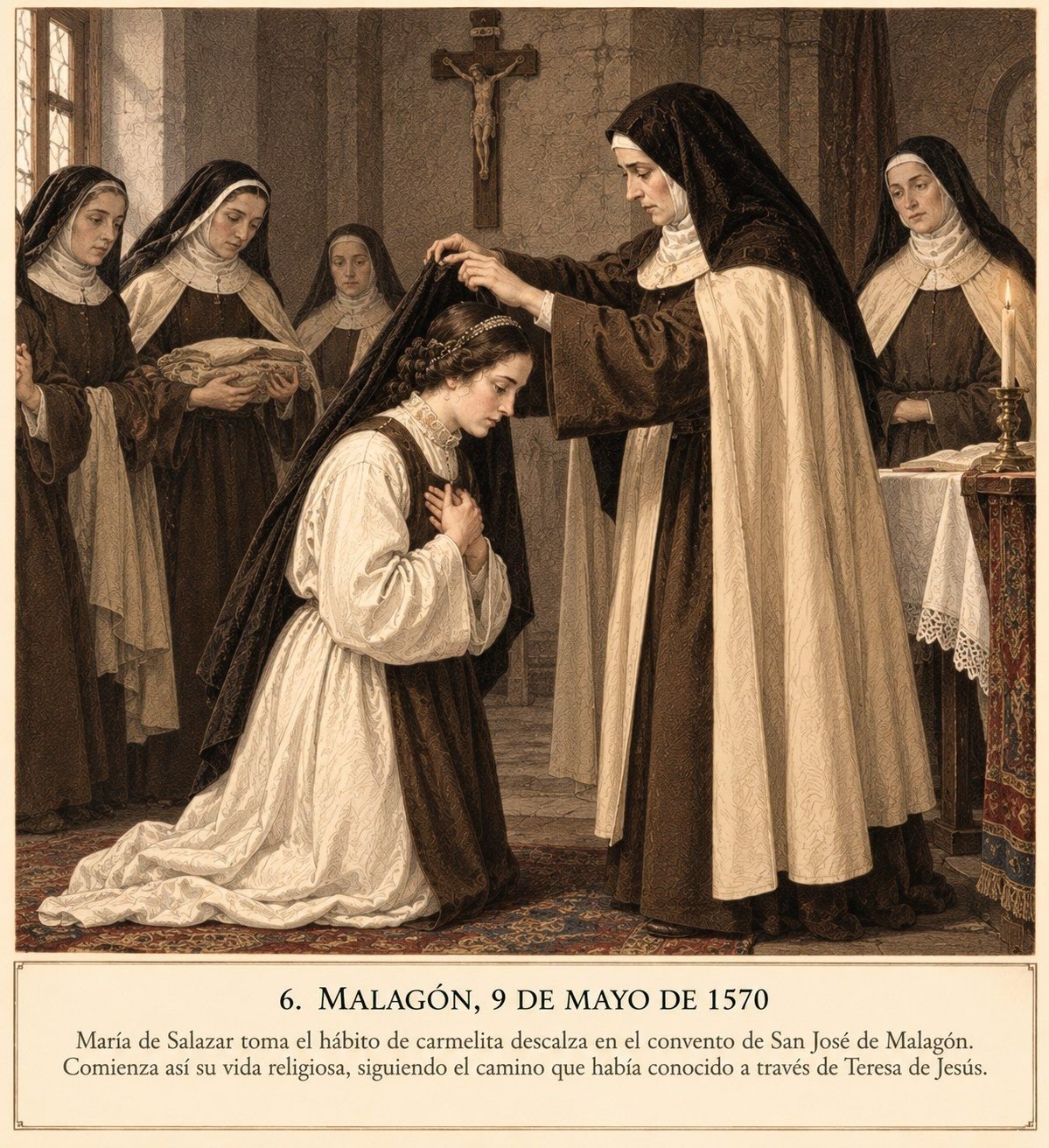
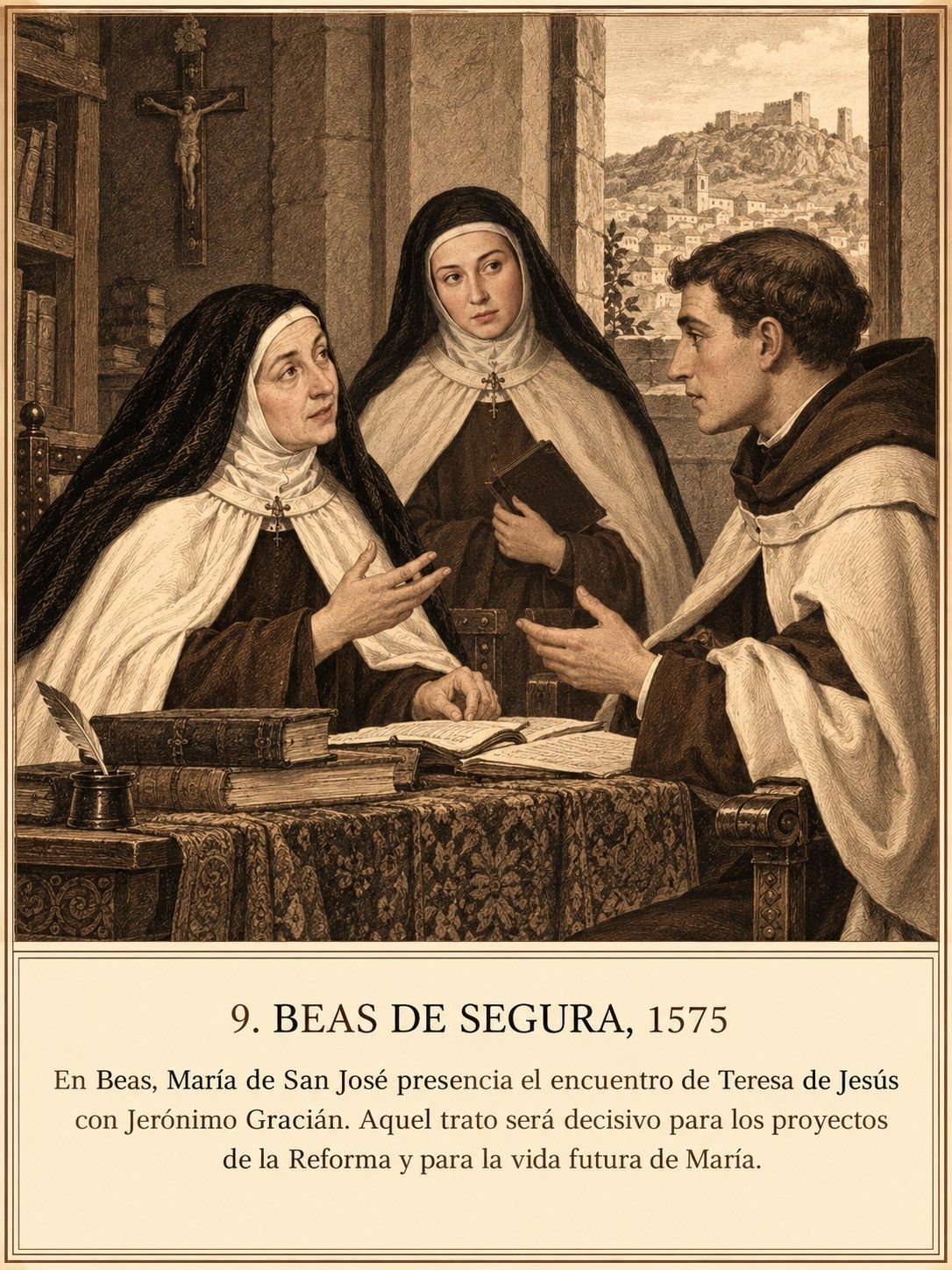
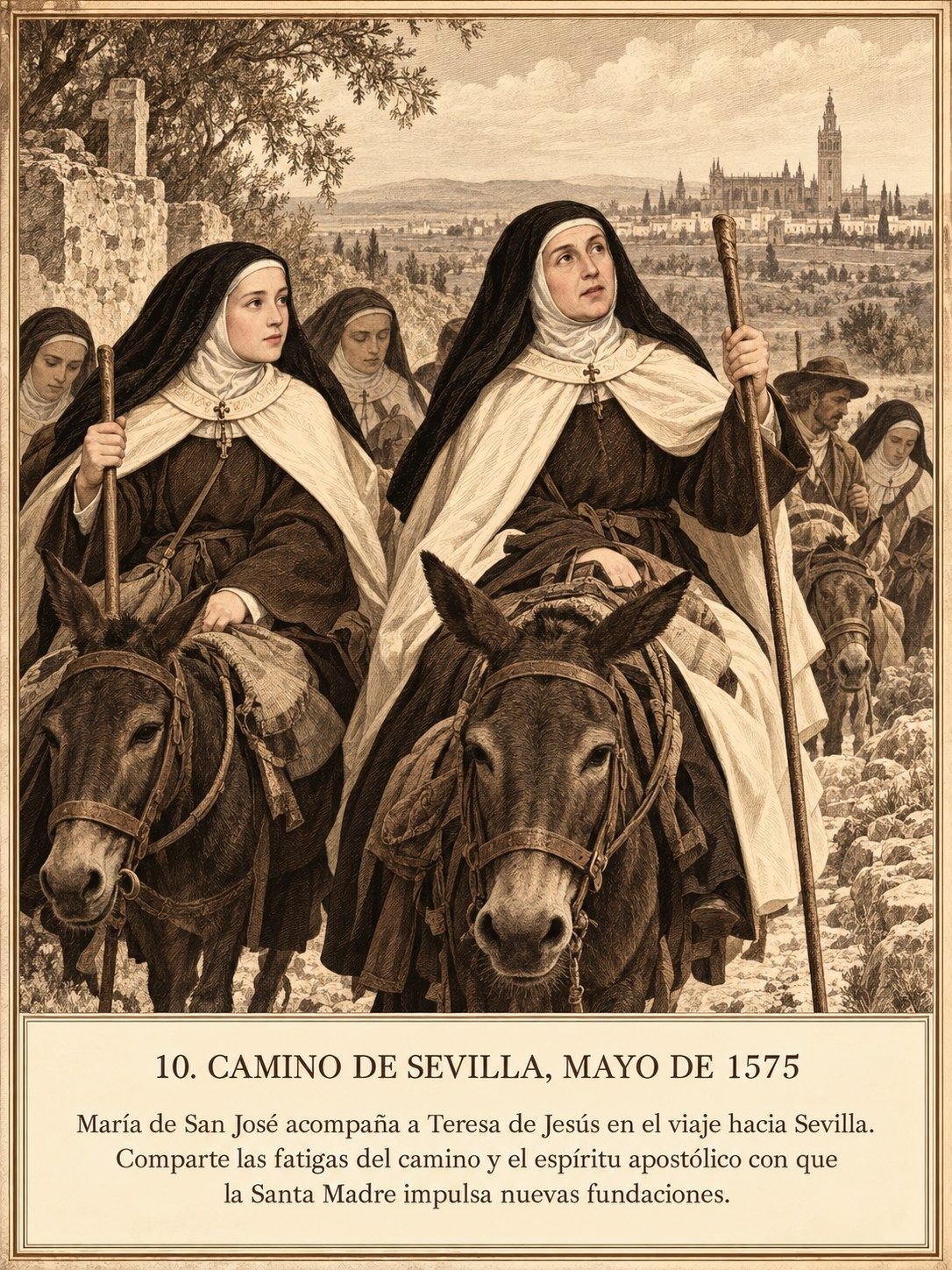
She entered the monastery of Malagón on 9 May 1570, the feast of Saint Gregory of Nazianzus, and took the name María de San José. She made her profession in 1571 and in those years composed her first poems of self-offering. In February 1575 Teresa took her along to Andalusia. At Beas they met Father Jerónimo Gracián, Apostolic Visitor, and his arrival changed the course of the expedition: the Caravaca project was cancelled and Teresa set out for Seville.
On 18 May they left Beas with six nuns. They entered Seville on the 26th, after nine days on the road, and on Trinity Sunday, 29 May 1575, the convent was founded. At that first chapter Teresa entrusted the government of the house to María, who was twenty-seven years old.
1575-1584
Prioress of Seville
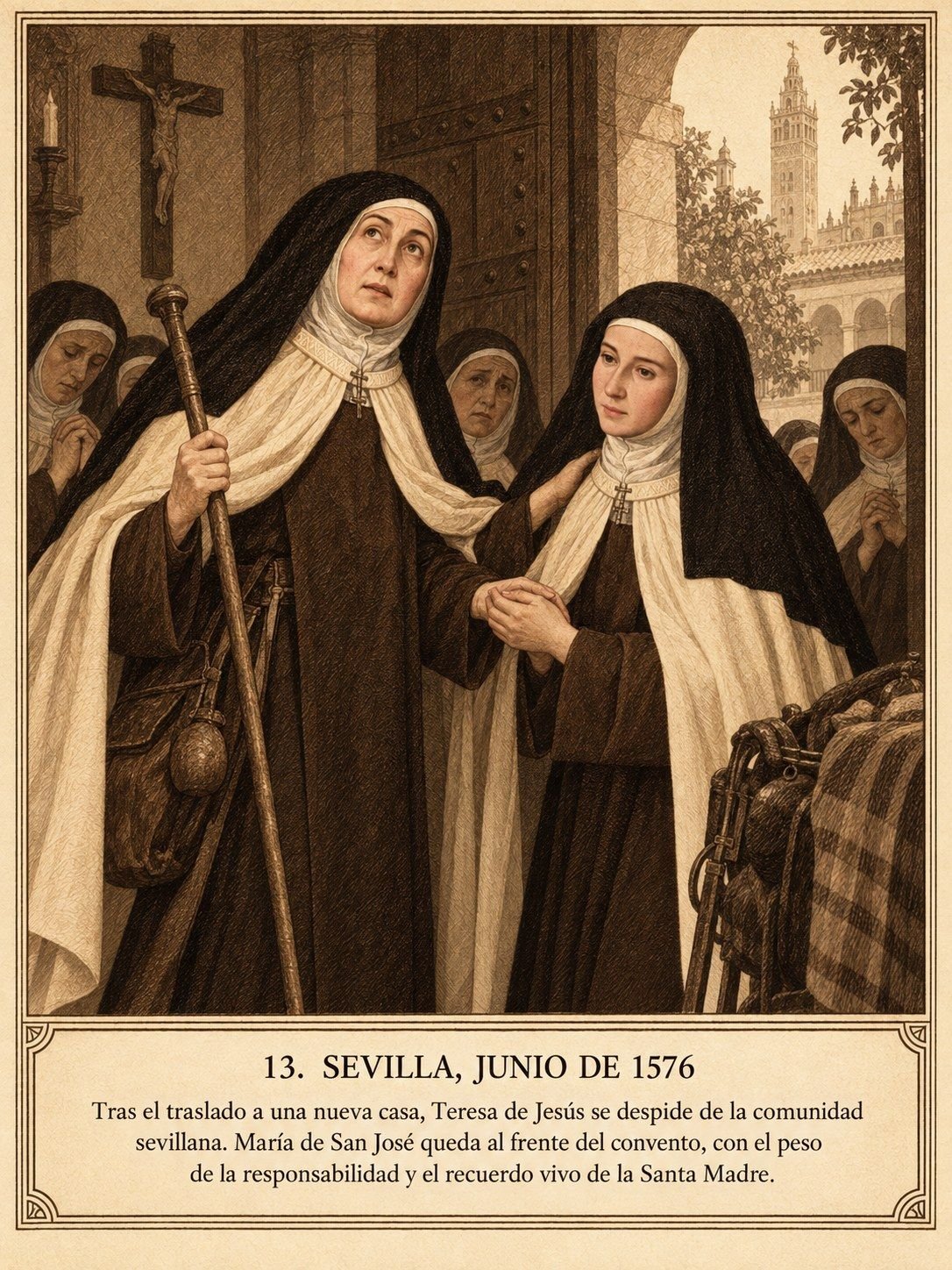
Teresa left Seville in June 1576 and never saw María again. From then on they wrote to each other often: more than sixty letters from Teresa to the prioress of Seville survive, made up of governance, affection and good humour. Teresa calls her “my daughter,” asks her to reply, advises her on novices, confessors and prayer, and asks her pardon when she thinks she has hurt her.
The years 1578 and 1579 were the hardest. In the midst of the offensive against the Discalced, the Calced provincial Diego de Cárdenas visited the house and, at the end of 1578, deposed María. She was left isolated in her cell, without voice or place, and Teresa wrote to her to suffer and keep silent. On 1 April 1579 Fray Ángel de Salazar was appointed Vicar General of the Discalced, and on 28 June he restored to María the office of prioress. The community elected her again in the following years.
“After her death they would have chosen her as foundress, and even in her lifetime, very gladly.”
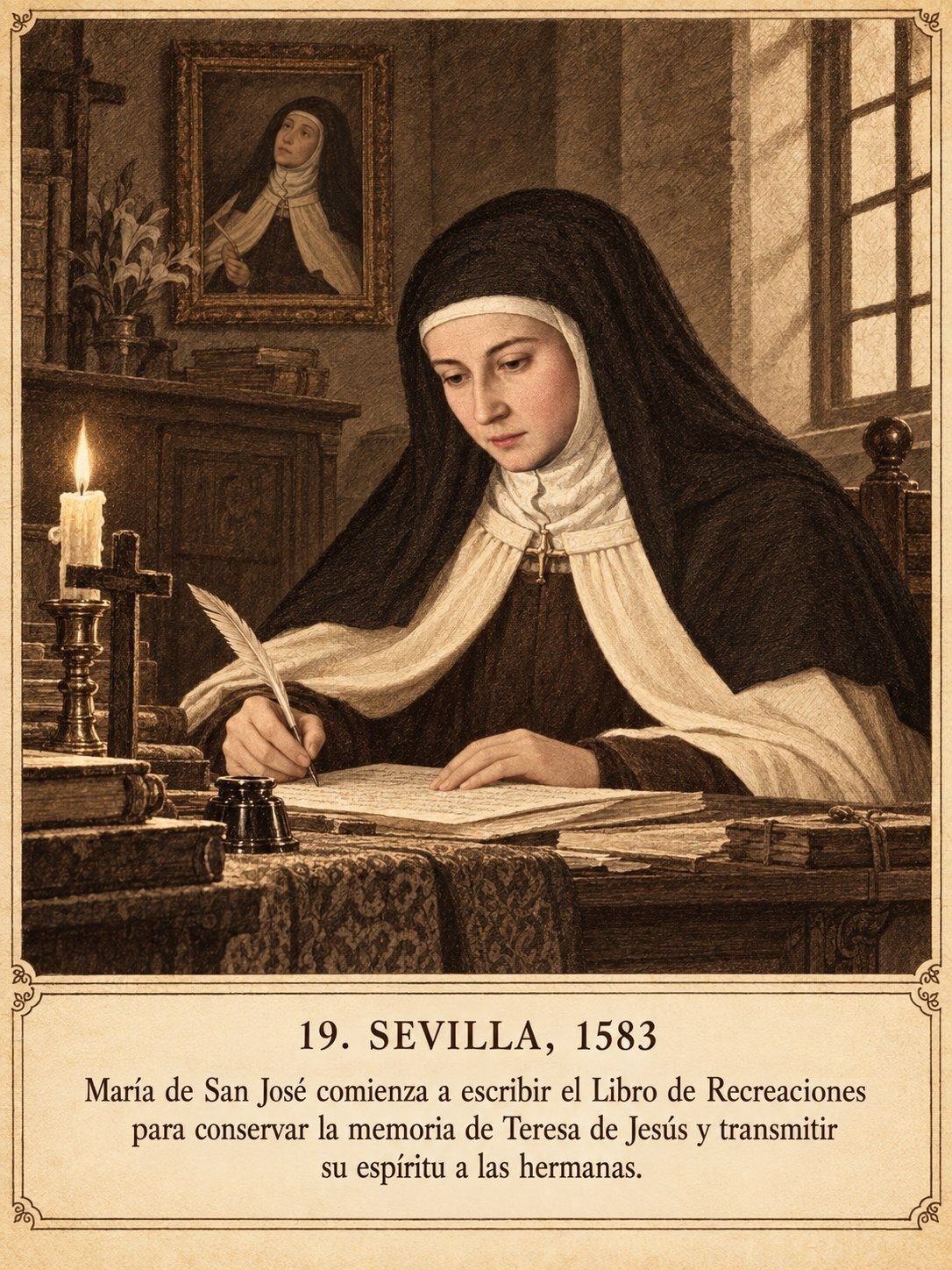
Teresa died on 4 October 1582. A year later, by order of Gracián, María began in Seville the Libro de Recreaciones.
1584-1593
Lisbon and the defence of the Constitutions
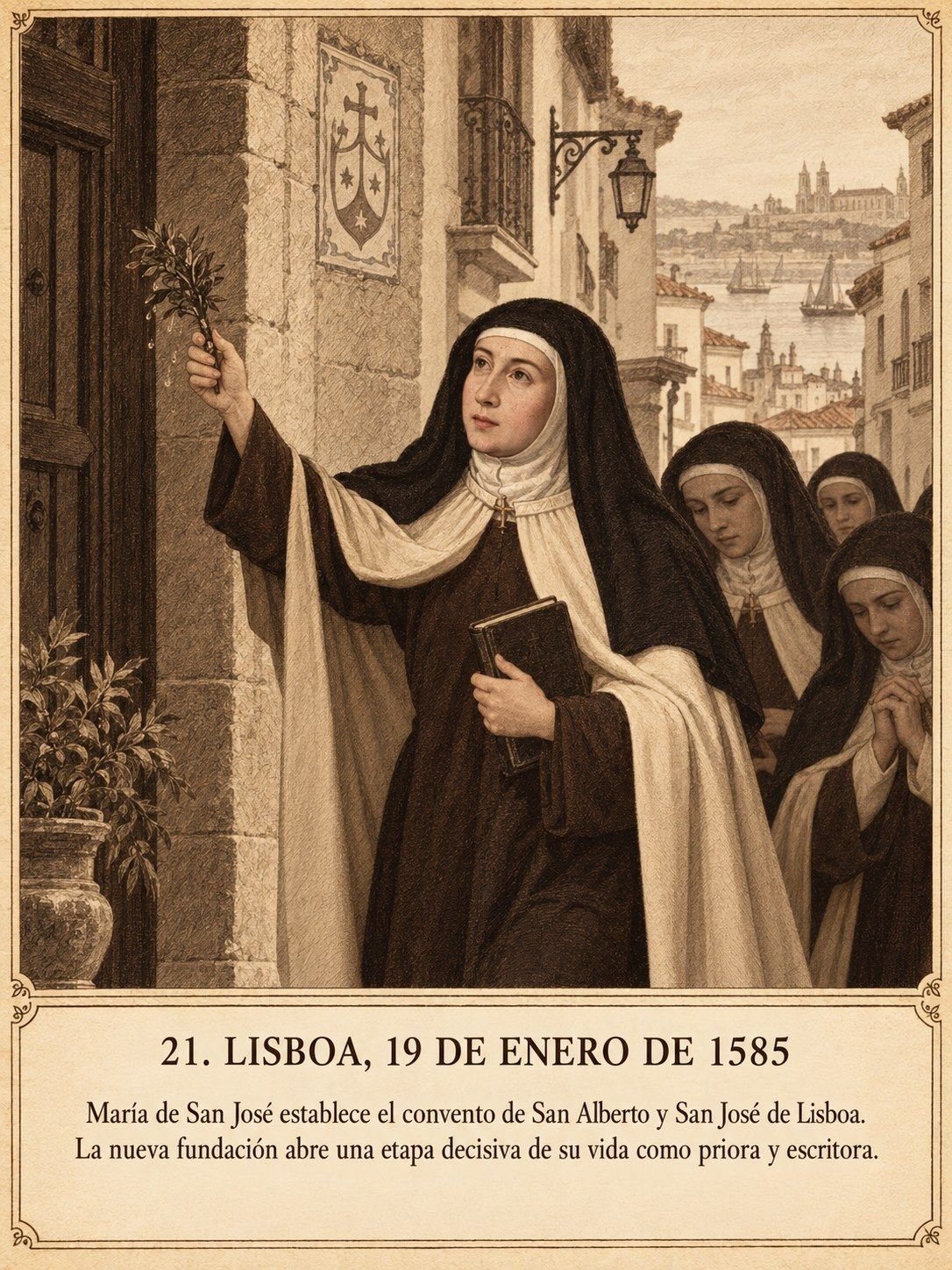
At the end of 1584 her superiors sent her to Lisbon to found the first Discalced Carmel in Portugal. She left Seville on 10 December with Gracián, Antonio de Jesús and Mariano, and reached Lisbon on Christmas Eve. She spent the first days in the Dominican convent of the Anunciada, with whose nuns she drew up the Santa concordia. On 19 January 1585 the community settled at San Alberto, and on 25 April María was elected prioress. She welcomed the Flemish Poor Clares and collaborated on their constitutions. In May 1589, with the English fleet in sight, she calmed the sisters who had taken refuge in the castle.
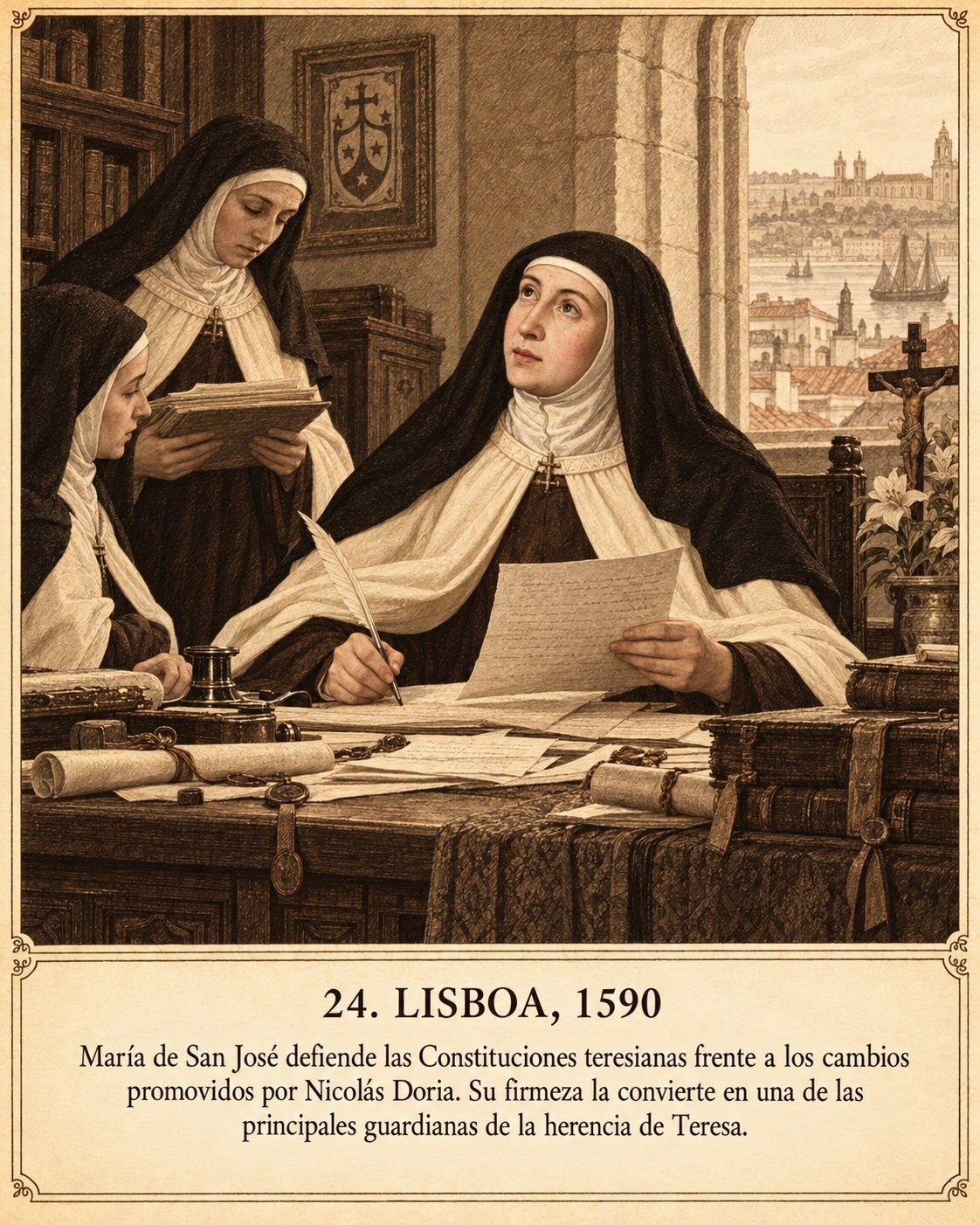
After Teresa’s death the provincial Nicolás Doria centralised the government of the Discalced and reduced the autonomy of the nuns. María wrote to the prioresses and promoted the confirmation of Teresa’s Constitutions, which Sixtus V approved in the Brief Salvatoris of 5 June 1590. Its execution was frustrated by the pope’s death and by a later brief. In 1588 she had been forbidden, under penalty of excommunication, to deal with Gracián, and on 17 February 1592 Gracián was expelled from the Order. The superiors attributed to both a friendship that she rejected.
In January or February 1593 they shut her in a padlocked prison. She spent about nine months there, speaking to no sister and with Mass reduced to days of obligation. The sources do not record the reason. From that confinement came the Carta que escribe una pobre y presa descalza, dated Good Friday, 16 April 1593.
Works
Writer and teacher
María wrote with an agile pen and a classical education. The following survive:
- Libro de RecreacionesA dialogue begun in Seville in 1583. It gathers her autobiography, the greatness of Carmel, the life and death of Teresa and the founding of Seville.
- Carta de una pobre y presa descalza and Ramillete de mirraWritings from the confinement of 1593 and the years that followed.
- Avisos o Consejos que da una priora a otraCounsels on governance (1590), with a Sevillian addressee.
- Tratado sobre la relajación religiosa and Instrucción de noviciasDated 1599 and 1602. The Instrucción was printed in French in 1612.
- Poems, letters and her deposition in the canonisation process of TeresaTwenty-three poems; the deposition was signed at San Alberto on 25 August 1595.
Her Escritos espirituales were gathered in an edition by Simeón de la Sagrada Familia (Rome, 1979), and the Libro de Recreaciones has an edition and English translation by Alison Weber and Amanda Powell (2002). Scholars such as Rafael Pascual present her as heir and transmitter of the Teresian charism.
1597-1603
Cuerva and memory
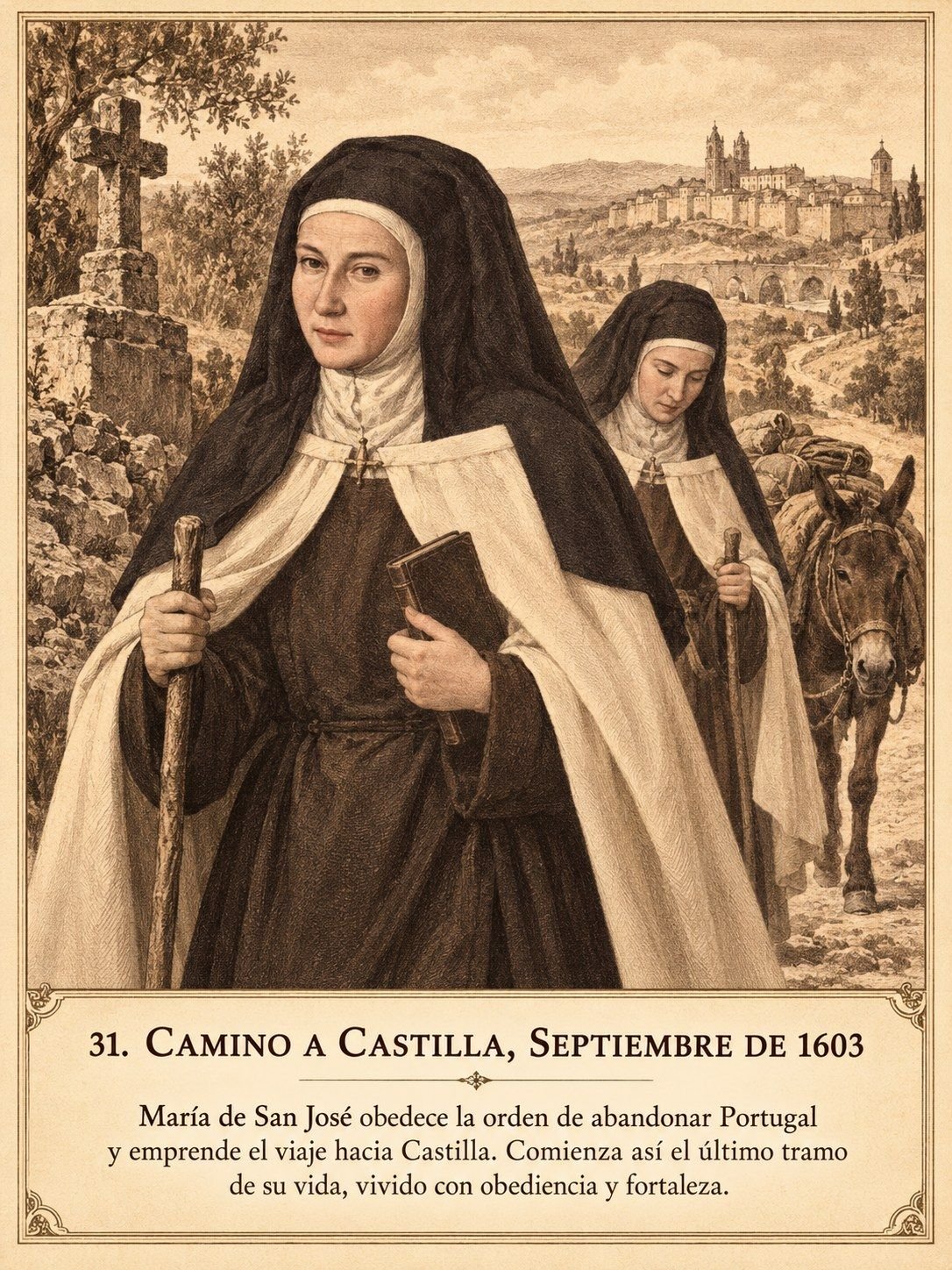
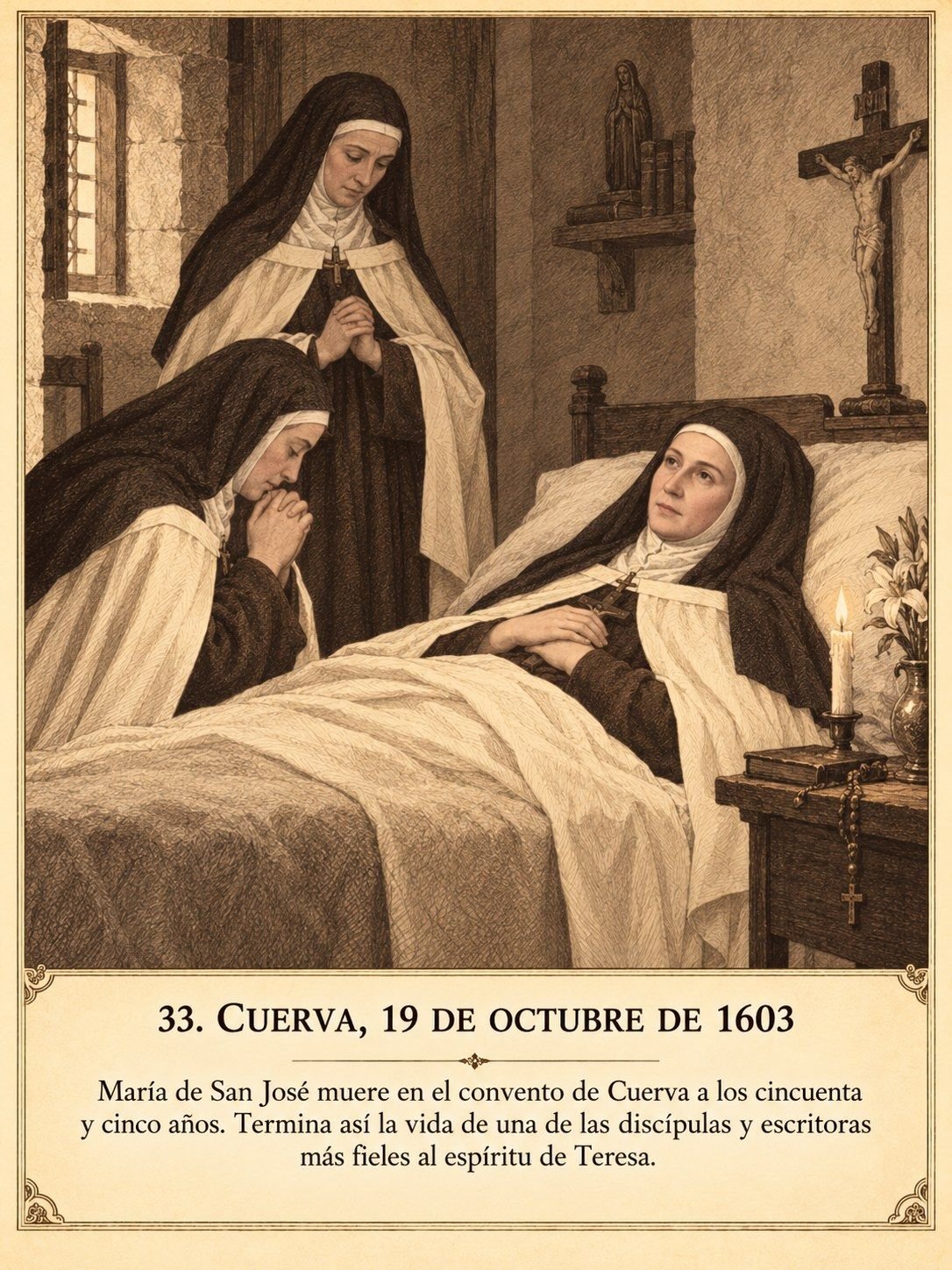
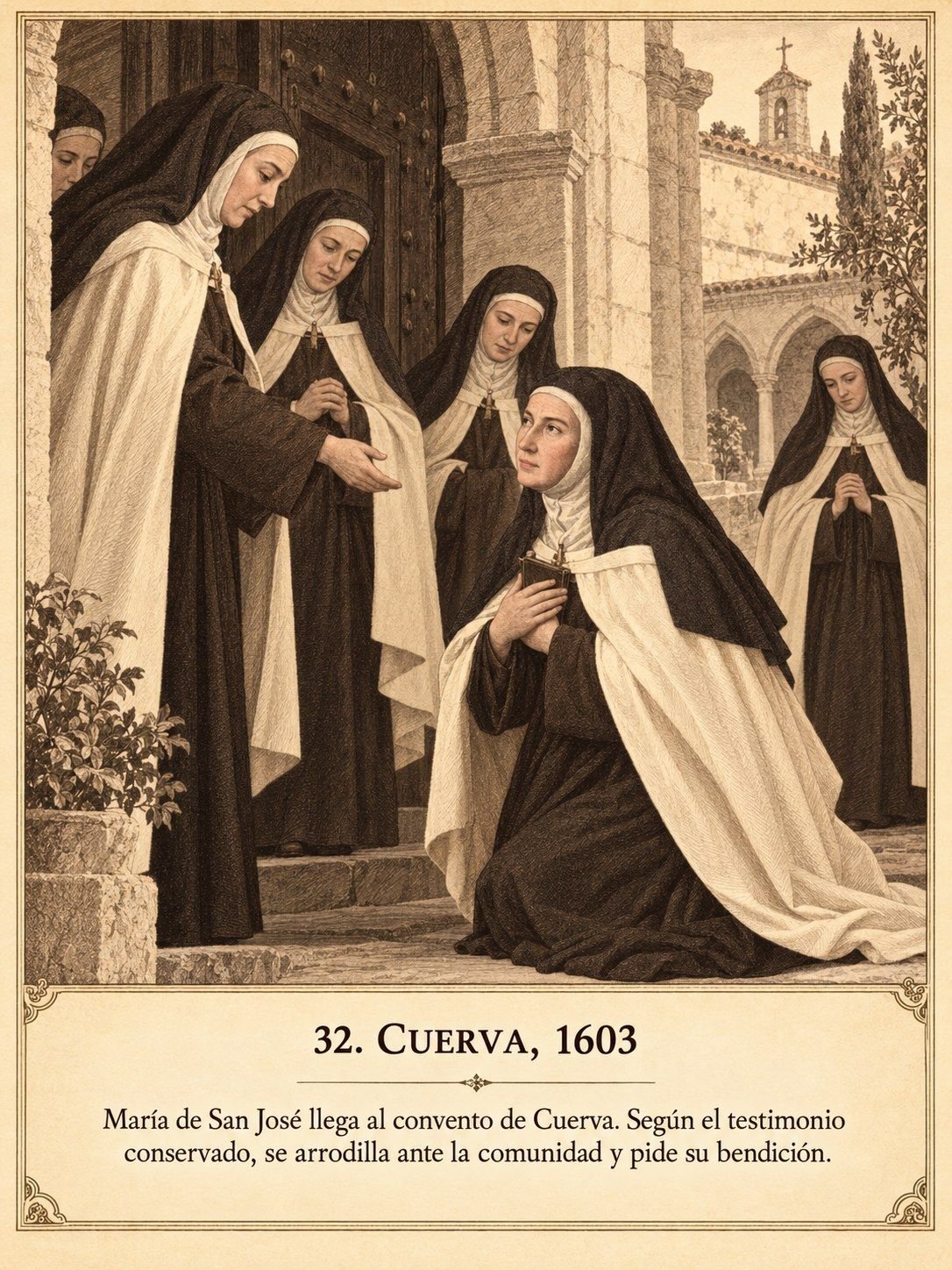
Elected prioress again in 1597, she governed San Alberto until April 1600. In May 1603 she encouraged Jean de Brétigny by letter to undertake the foundation of the Carmel in France. The General had her removed from Lisbon before the French arrived. She reached Talavera de la Reina with Blanca de Jesús on 7 September and, eight days later, received the order to continue alone to Cuerva. She died there on 19 October 1603, at nine in the evening, at the age of fifty-five.
The chronicle of Belchior de Santa Ana, published in Lisbon in the mid-seventeenth century, devoted more than a hundred pages to her and presented her with an aura of holiness. Gracián held her to be one of the women of greatest purity, spirit and prudence he had known after Teresa. In 1991 the General Chapter received a proposal to introduce her cause for beatification, and in December 1999 the General Definitory expressed its sorrow for the punishments that she and Ana de Jesús had suffered and for the treatment they received in the historiography of the Order. Today it is not known where she is buried.
Biographical synthesis drawn from the biographies by Ros, Moriones, Pérez García, Rodríguez and Pascual, from Jáuregui’s study and from the edition by Weber and Powell.